


Logistics Intelligence Bulletin | November 18, 2025 → November 25, 2025
Last week left key figures and announcements for the world of logistics And the foreign trade: from records in Mexican ports to new automotive investments that underpin the Nearshoring. At the same time, the economy showed mixed signals that we must interpret strategically. In this bulletin, we summarize The most important thing from the last 7 days and we highlight what to watch for in the coming days, with a consultative approach that will help you make logistical decisions.
Despite global uncertainty, Mexico continues to establish itself as a logistics hub of North America. We will analyze how a key port broke cargo brands, what the regulatory changes in the Federal Official Gazette entail for importers/exporters, and what to expect from upcoming economic indicators and events. Executive and strategic information to keep your supply chain one step ahead!
📰 What was relevant from the previous week
Shacman and Sesé announce truck plant in Puebla
During Expo Transporte 2025, the Chinese heavy-duty vehicle firm Shacman Mexico (Sparta Motors) confirmed, together with the Spanish company Sesé (specialist in logistics and assembly), the opening of an assembly plant in Puebla. The new facility will focus on assembling Shacman trucks in SKD format (semi-disassembled kits) to meet growing demand in Mexico and Latin America. In its initial phase it will produce 1,000 units per year, with a view to scaling to 4,000 units by its third year of operations.
Impact: This automotive investment reinforces the momentum of Nearshoring in the region. The Shacman—Sesé alliance combines manufacturing and 4PL logistics, strengthening local supply chains and reducing delivery times for heavy trucks. Puebla is thus consolidating itself as an industrial hub, creating jobs and opportunities for suppliers (for example, auto parts and assembly services).
Strategically, the new plant will increase the supply of Load project (machinery and vehicles) for export, which will benefit transporters specialized in services RoRo (roll-on/roll-off) and LoLo (lift-on/lift-off). In short, Mexico consolidates its position as an attractive destination for foreign investment in the heavy automotive sector, diversifying regional production.
SOURCE: Somosindustria.comSomosindustria.com
Banxico cuts interest rate to 7.25%
El Bank of Mexico reduced its benchmark interest rate by 25 basis points, placing it at 7.25% annual. This is the second consecutive cut, made possible by the fact that inflation has moderated to levels close to 3% (3.57% per year in October). The decision, announced after last week's monetary policy meeting, reflects the economic slowdown observed in the third quarter and seeks to stimulate credit activity and consumption.
Impact: A lower rate lowers the cost of financing for logistics companies, importers and exporters. This could boost the renewal of transport fleets and investment in infrastructure of forwarders and 3PL/4PL operators, by providing loans with lower interest rates. However, it could also exert some pressure on exchange rate; a slightly weaker peso would make imports (fuels, supplies) more expensive, although it would favor Mexican exports.
In strategic terms, companies must take advantage of the lower financial cost environment to investing in logistics efficiency, but carefully managing foreign exchange risk in their international contracts. Banxico, for its part, showed with this cut that it prioritizes sustaining economic growth, which suggests a stable rate outlook for the coming months if inflation remains under control.
SOURCE: elpais.com
MSC breaks world record for shipping capacity
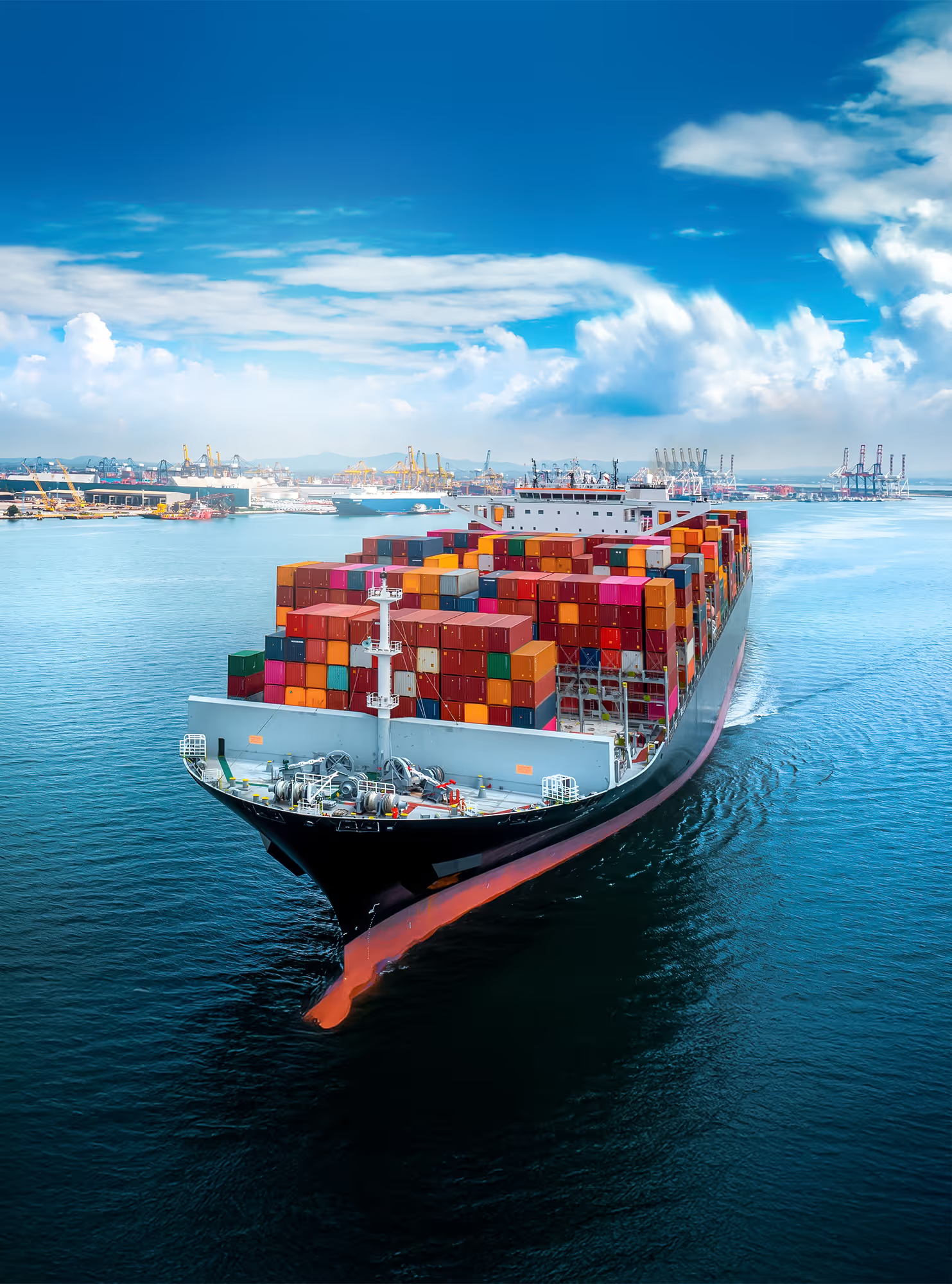
The shipping company Mediterranean Shipping Company (MSC) reached a historic milestone by surpassing 7 million TEU of capacity in its global container ship fleet. In a maritime market with volatile demand and falling rates, the Swiss-Italian shipping company added dozens of new ships in record time, taking just 15 months to go from 6 to 7 million TEU of operating capacity. This organic growth - without mergers or acquisitions of rivals - consolidates MSC as the largest container carrier in the world, widening the gap with its competitors.
Impact: MSC's dominance in the oceans intensifies competition in global shipping, a crucial factor for the logistics costs of importers and exporters in Mexico. Higher available capacity could translate into more competitive freight rates on Asia-America routes, benefiting companies that import inputs or export containerized products, especially if demand does not grow at the same rate. However, the rapid expansion of the fleet also poses the challenge of a possible shipping oversupply, which would have implications for the stability of the freight market.
For Mexican logistics, MSC's leadership — with new routes and larger vessels — can mean more direct and frequent services (for example, Asia-Mexico express connection) but it also requires adaptation: national ports such as Lázaro Cárdenas and Manzanillo must continue to improve infrastructure to receive large ships. In short, MSC's achievement redefines the dynamics of maritime transport and requires all players in the logistics chain to be aware of changes in rates, shipping alliances and the availability of space on ships.
SOURCE: t21.com.mx
.jpg)
The highlights of the DOF
Final resolution on steel beams — Secretariat of Economy
The Ministry of Economy published a final anti-dumping resolution related to imports of type I and H steel beams of Spanish origin. In it, after completing the review of the validity of the compensatory fees, the authority decided Do not apply compensatory fee some to those imports. This announcement in the Official Gazette of the Federation (DOF) of November 10 implies that beams from Spain (notably from the steel company AMOB) may continue to enter without paying the previously established anti-dumping fees.
Impact: For Mexican construction companies and manufacturers that use these beams, eliminating the quota will result in immediate cost savings and greater availability of imported inputs. This could boost infrastructure and construction projects by making raw materials cheaper. On the other hand, domestic steel producers will face a market that is more open to foreign competition, so they will need to focus on efficiency and added value to maintain market share. The Economics decision suggests that, in the review, it was concluded that these imports do not harm the domestic industry under current conditions.
However, continuous vigilance remains: if unfair practices are detected in the future, the authorities could reactivate trade defense measures. In short, this ruling temporarily balances the interests of industrial consumers and producers, and it is important that companies monitor future DOF publications for changes in policies of foreign trade similar.
Fish import quota — Secretariat of Economy
The November 13 DOF included a Amendment to the rules of National Public Tender No. 008/2026, related to the import quota for fresh, chilled and frozen fish fillets.
La Secretariat of Economy adjusted criteria in the call to allocate the volume with the established tariff-quota, seeking to facilitate the participation of importers and the transparent allocation of this tariff quota. This amendment updates the rules of the game for companies competing to import fish under preferential quota conditions.
Impact: In the short term, importers of seafood should carefully review the new tender requirements and deadlines so as not to miss opportunities to access the quota. A more agile and clear allocation benefits the food and restaurant industry, as it ensures a stable flow of inputs (fish) at costs controlled by a preferential rate.
Strategically, these changes show the intention of Economics to optimize quota administration mechanisms: by simplifying procedures or requirements, the risk that part of the quota will be left unused due to bureaucracy is reduced. For logistics operators who manage the cold chain of imported fish, a well-allocated quota means more predictable volumes of cargo. In short, this amendment reinforces confidence in the rules for importing essential foods, guaranteeing supply without neglecting the protection of domestic producers when appropriate.
Allocation of the quota for Peruvian paprika — Secretariat of Economy
In the November 12 edition, the DOF published a Result announcement for the import quota of dried paprika-type chiles originating in Peru. The Ministry of Economy released the list of companies that obtained Qualification records to participate in Tender No. 007/2026, through which this quota will be allocated. This notice makes official which importers met the legal and technical criteria to access a portion of the current tariff-quota volume for Peruvian paprika.
Impact: The publication provides transparency and certainty to those interested in importing paprika under the preferential quota. Companies that managed to qualify now have the green light to compete for the quantities available, which will allow them to plan their purchases and international logistics with greater security. For the food industry (sauces, condiments) that use this input, a continuity of supply is expected thanks to the controlled entry of paprika at a lower tariff.
The announcement also reflects the authority's commitment to managing international trade agreements: this quota derives from the Peru-Mexico Trade Agreement, and its proper administration strengthens the bilateral relationship and benefits Mexican consumers and processors with more raw material options. In terms of logistics, those who import these chilies must coordinate with the assignee companies to manage the authorized volumes within the schedule and the conditions established by the final tender.
{{transport}}
📡 In the spotlight this week
Wednesday — Federal Reserve Minutes
Este Wednesday, November 19 the U.S. Federal Reserve will publish the minutes of its last monetary policy meeting. At that meeting, the US central bank once again cut its key interest rate by 25 basis points (second consecutive decline). The details revealed by the minutes will be closely analyzed by the markets: any hint about future Fed decisions could affect the exchange rate and global financial conditions.
For Mexico, one more tone Dovish (accommodative) in the Fed could imply continuity in the strength of the peso or even greater scope for Banxico cuts, while signs of inflationary concern could strengthen the dollar.
In the logistics sector, these effects translate into costs: exchange rate changes impact the prices of imported fuels and inputs, and international rates influence the cost of credit for infrastructure projects or fleet acquisition. In short, the Fed minutes are an important barometer of the environment in which North American supply chains will operate in the coming months.
Thursday — IOAE Indicator and Banxico's decision
El Thursday, November 20 will be loaded with national economic information. On the one hand, the INEGI will release the Timely Indicator of Economic Activity (IOAE) for October, which provides an early (preliminary) sign of the monthly performance of the Mexican economy. This leading indicator will allow us to see if activity rebounded or moderated at the beginning of the fourth quarter, which is crucial for companies planning production and logistics towards the end of the year.
On the other hand, that same day the Bank of Mexico It will announce the Minutes of his most recent monetary policy meeting, at which he cut the interest rate again by 25 bps. The minutes of Banxico will detail the internal discussion: balance of inflation risks, votes of the members of the Governing Board and economic projections.
Why does this matter to logistics? Because decisions such as the cost of local financing, domestic demand for goods (and therefore volumes to be transported) and even possible weight fluctuations that affect export/import costs depend on these perspectives. In short, on Thursday we will see two key pieces of the economic puzzle: the IOAE will tell us how the economy is doing “in real time”, and Banxico will tell us how the guardians of financial stability read the picture and how favorable the winds will be for trade for the rest of the year.
Friday — Mexico's 3rd quarter GDP
Este Friday, November 21 INEGI will publish the timely estimate of Gross Domestic Product (GDP) from Mexico corresponding to third quarter of 2025 (July—September). These data will provide a complete picture of the country's recent economic performance, after previous reports pointed to some weakness in key sectors. If a shrinkage moderate (expected to be around -0.2% to -0.3% year-on-year), the signal of Deceleration in the economy.
For the logistics sector, an economic slowdown may mean a lower volume of domestic cargo (less industrial production, lower consumption that generates movements of goods); although, by contrast, demand related to foreign trade (driven by Nearshoring and exports to the US) could remain dynamic even in a slower domestic environment. If GDP were to surprise on the rise, it would indicate resilience and would be good news for carriers and forwarders, as it is usually accompanied by greater movement of goods. On the contrary, solid negative data will invite companies to turn to efficiency: optimizing routes, adjusting inventories and taking care of costs in the face of possible lower growth in 2026. In any scenario, this macroeconomic indicator will define the tone of business and government decisions at the start of next year.

📈 The key facts
Economy - Annual inflation drops to 3.57% (October 2025)
La general inflation In Mexico it moderated to 3.57% per year in October of 2025, down from 3.76% recorded in September and comfortably within Banxico's target range (3% ± 1 point). This level of consumer prices, the lowest in several years, was achieved thanks to decreases in agricultural products (many fruits and vegetables fell in price) and stable electricity rates after summer subsidies.
Why is it strategic? A low inflationary environment stabilizes logistics costs: fuels, tolls, storage and other inputs tend to rise less, making it easier to plan transportation rates and supply chain budgets. In addition, controlled inflation opened the door to Banxico's recent drop in interest rates, making loans cheaper to expand fleets or invest in infrastructure.
For importers and exporters, lower domestic inflation has also helped to maintain a competitive exchange rate. In summary, the data confirms that Mexico is going through a period of price stability, which provides certainty to negotiate long-term logistics contracts and focus on operational improvements rather than dealing with cost fluctuations.
SOURCE: Mexicocomovamos.mx
Logistics - Puerto Lázaro Cárdenas exceeds 1 million TEU
APM Terminals Lazaro Cardenas reported that, before the end of 2025, it reached for the first time the movement of 1,000,000 TEU (20-foot containers) in one year. This historic milestone consolidates the operational maturity of the main specialized terminal in the Michoacan port and makes it the first in Latin America to surpass that annual mark. The achievement comes after significant investments in infrastructure during 2025, including the incorporation of super post-Panamax electric cranes in October and the modernization of patios and systems in the terminal.
Strategic importance: The record held by Lázaro Cárdenas reflects the increase in foreign trade flows —particularly from Asia— driven by Nearshoring and the diversification of supply chains to Mexico. A higher port volume indicates more availability of space and shipping frequencies for Mexican exporters and importers, potentially reducing transit times.
However, it also “tensions” the discussion about port capacity of the Pacific: with peaks of congestion becoming structural globally, this growth puts the national infrastructure to the test.
The good news is that APM Terminals managed to handle the increase without major disruptions, reducing service times and operating steadily even in peak seasons. For logistics customers, this translates into greater reliability and efficiency. Going forward, the sector must continue to invest in port expansions, land connections (railways and highways) and technological adoption to accompany this new scale of operations. Lázaro Cárdenas is shaping up as a key logistics node of North America, attracting new routes and services that benefit the entire regional supply chain.
SOURCE: t21.com.mx
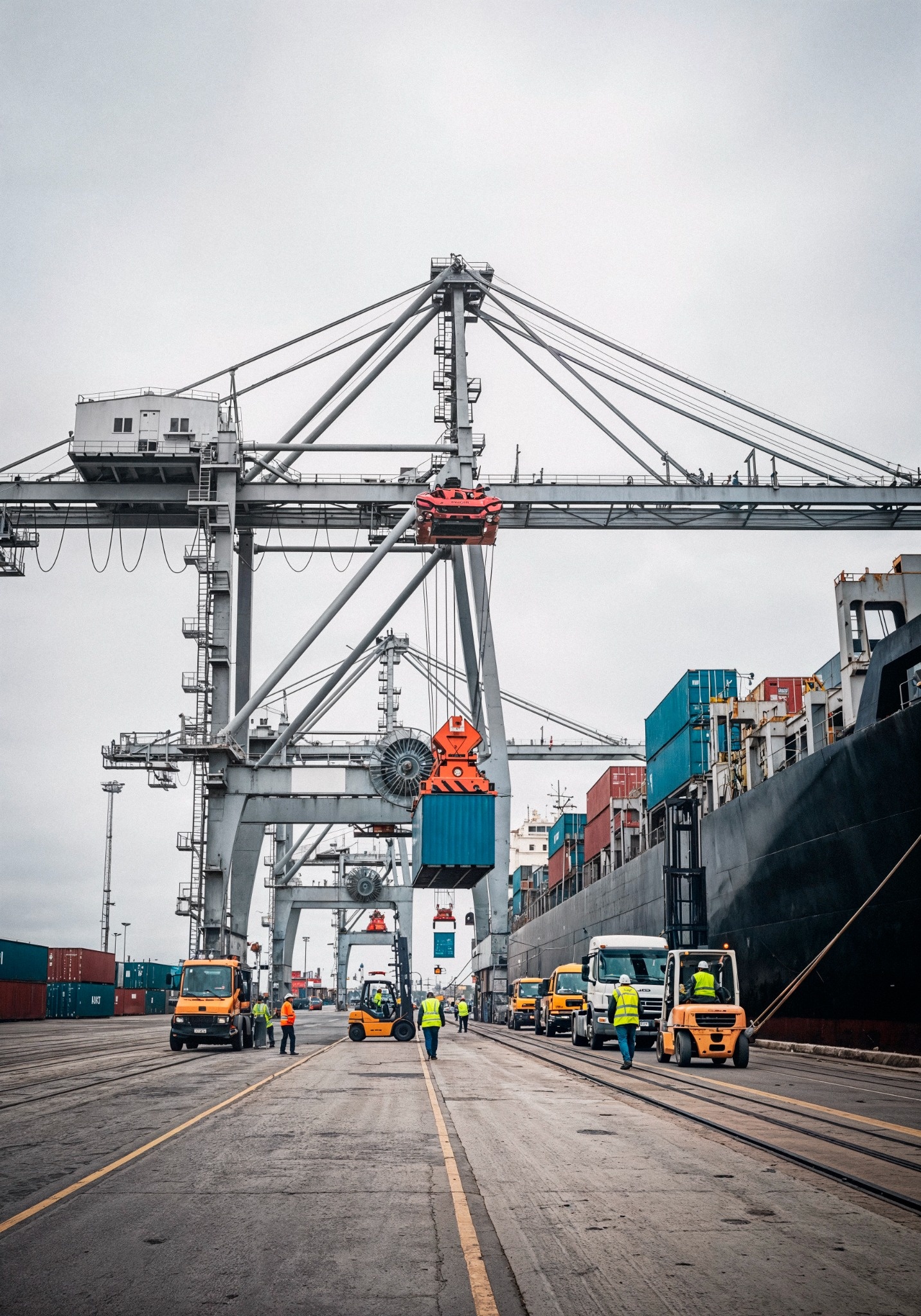
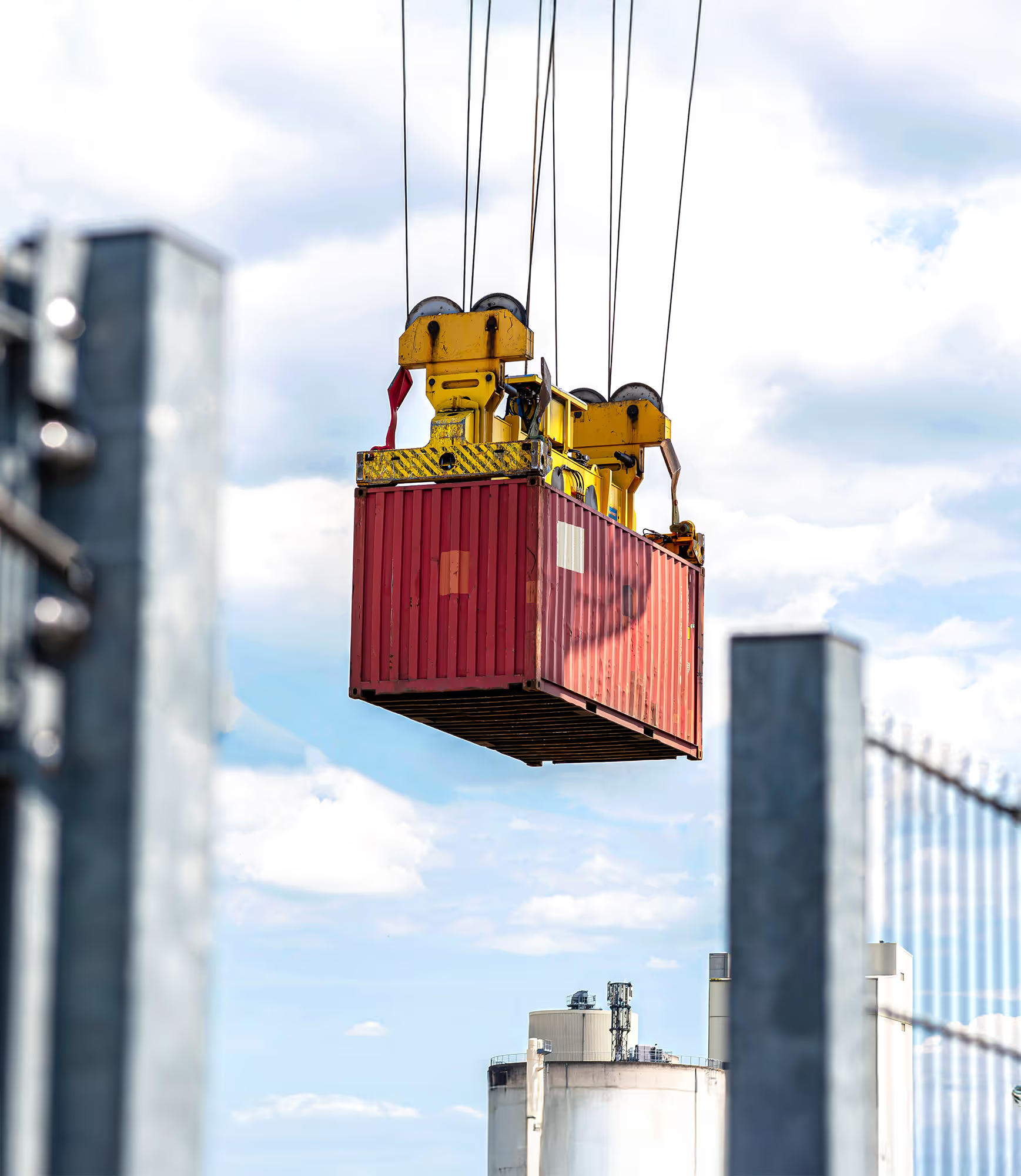
[Port logistics in Mexico] [caption: Record number of containers moved in the port of Lázaro Cárdenas, reflecting the logistics boom driven by nearshoring]
👀 Interdabs Strategic Vision
The convergence of trends that we observe requires a comprehensive strategic vision in logistics. On the one hand, the cargo boom in ports such as Lázaro Cárdenas confirms that the Nearshoring it's here and now — supply chains are being reconfigured to bring inputs closer, creating opportunities for growth in transportation, warehousing and distribution services.
On the other hand, the domestic economy shows a waiting rate (and even a slight contraction), which means that logistics companies must shield your operations against volatility. How to balance both panoramas? From Interdabs we recommend a double path: taking advantage of the wind in favor of foreign trade, but with flexible sails to weather possible storms in the domestic market.
In practice, this involves strengthen resilience of the supply chain. It is time to diversify routes and modes: for example, evaluate alternative ports or less saturated border crossings, and combine maritime transport with air or land transport as appropriate, ensuring continuity even if a node becomes congested. Companies must also optimize inventories and spare capacity; a slower economy is an opportunity to implement solutions Just-in-time O Just-in-case in an intelligent way, balancing costs and service.
In addition, keeping close to information is key: monitoring indicators (such as the Banxico or IOAE minutes) and DOF regulations to anticipate changes that affect costs or times. Interdabs, as a reliable 4PL logistics partner, positions itself on the side of our customers to navigate this environment. With a consultative approach, we support importers, exporters and operators in identifying efficiencies — whether in container shipments or in Project uploads specialized— and in adopting technology for greater end-to-end visibility. We believe that with proactive planning, innovation and a good ally Forwarder, challenges become competitive advantages. Let's move forward with a firm step in the supply chain.
Thank you for your attention to this newsletter. In Interdabs, we reaffirm our commitment to providing you with high-value logistics intelligence to strengthen your operational and strategic decisions.
If you want personalized advice on any topic, we are at your disposal to accompany you with precision and experience. 🚛📦
{{advice}}






Everything your logistics needs