



The Nearshoring Mirage: Industrial Growth and Profitability | The Weekly Logistics
The final quarter of 2026 is devouring corporate operating margins. Mexico is capitalizing on foreign investment at a historic pace, but infrastructure bottlenecks, rapidly rising freight costs, and customs rigidity are turning industrial growth into a profitability risk.
Your Executive Summary (TL;DR):
The shift: Nearshoring is driving manufacturing in Mexico, but industrial saturation and infrastructure limitations are complicating the movement of goods across North America.
The risk: Rising freight costs, currency fluctuations, and tariff changes can shrink your margins and jeopardize your year-end deliveries.
The solution: Integrate operational visibility, customs planning, and transportation alternatives through a 4PL logistics model.
The benefit: Anticipate bottlenecks, optimize your costs, and build a supply chain prepared to respond to market changes.
🚛 1. Nearshoring: More investment, less room to maneuver
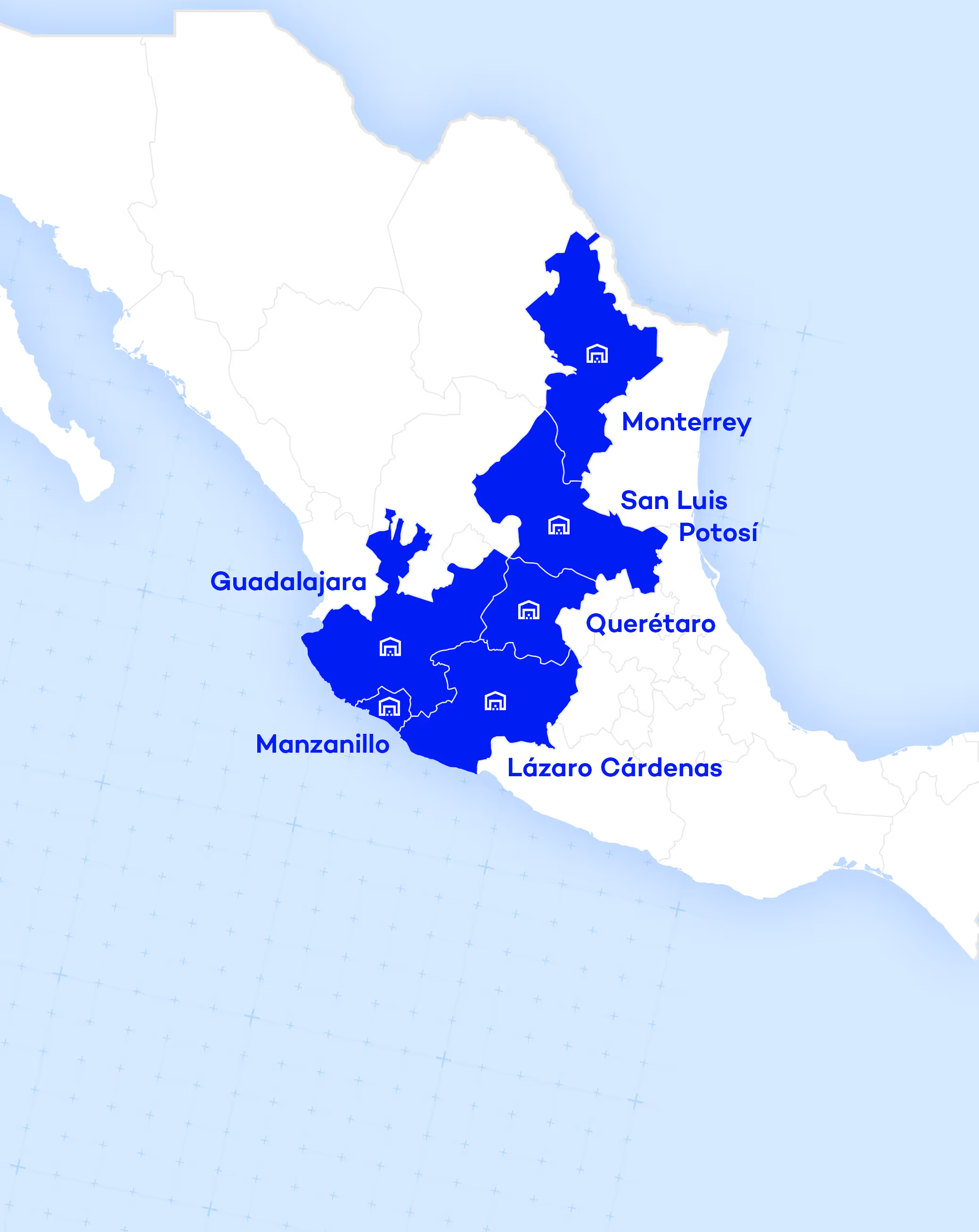
The relentless expansion in the Bajío region and along the northern border has triggered a logistics availability crisis. For high-synchronicity industries like Automotive and High Tech, securing an industrial facility solves only 20% of the challenge. The real bottleneck is the saturation of critical routes.
- The breaking point: A plant operating at 100% capacity loses its entire competitive advantage if a border crossing disrupts the flow or if inventory gets stuck on the road.
- The 4PL play: Diversify urgently. It is imperative to integrate rail corridors and intermodal schemes to bypass ground congestion. The true competitive advantage no longer lies in geographic proximity, but in operational predictability.(Source: American Industrial Magazine — Nearshoring in Mexico 2026).
📉 2. Freight inflation: The silent drain on your budget
Underestimating the cumulative impact of transportation on the final product cost is the most expensive logistics mistake of Q4. With rising ground rates and decreasing unit availability, operating under rigid contracts is financially unsustainable.
- The breaking point: Absorbing extra costs due to a lack of strategic consolidation, or relying on a single modal provider, directly drains the profit margin of every shipment.
- The 4PL play: Audit high-cost routes, demand real-time visibility, and transition toward multimodal orchestration. Do not choose your routes based on the initial rate; evaluate the Total Cost of Ownership (TCO). A strategic partner anticipates capacity constraints before the market imposes its prices on you.
🚨 3. Countervailing duties: The hidden risk in the Pacific
For highly regulated sectors such as Steel and Healthcare, the expiration and adjustment of countervailing duties published by the Ministry of Economy can pulverize an import's margin.
- The breaking point: A miscalculated tariff classification or an underestimated obligation from Asia instantly translates into customs holds, fines, and unbudgeted tax contingencies.
- The preventive play: Immediately map critical tariff classifications with your customs broker before confirming the next purchase order. Profitability is defended from the compliance customs; proactive planning is the only way to integrate budget changes without surprises.
🚨 DOF Highlights
Amendments to the LIGIE and Interoceanic Corridor facilities — Ministry of Economy
Updates have been published regarding critical tariff classifications and customs provisions applicable to international transit between Coatzacoalcos and Salina Cruz.
These provisions require foreign trade and finance teams not to assume automatic cost reductions. Preventive audits of tariff classifications and technical evaluations of alternative routes (handling RoRo / LoLo) prevent overpayment of taxes and fiscal contingencies during importation.
DOF base URL: https://www.dof.gob.mx?year=2026&month=10&day=13
In the spotlight this week
📉 Thursday, October 22 — Mexico Supply Chain Nearshoring Summit 2026: Transport demand is outpacing available supply. Secure your shipping projections and finalize negotiations today, or your operations will be exposed to exorbitant spot rates and a lack of available units for year-end.
⚓ Compensatory Duty Expirations: The Ministry of Economy is adjusting entry rules for Asian suppliers. Ignoring the expiration of these duties and failing to audit your tariff classifications will leave your cargo held at customs with unbudgeted surcharges.
Key data
💰 Economy: With the exchange rate hovering around 18.49 pesos per dollar, volatility is your biggest capital drain. Anyone who fails to coordinate shipments with currency hedging and an updated Total Cost of Ownership (TCO) will turn a profitable import into a direct financial loss on their income statement.
📦 Logistics: The shortage of industrial space is aggressively driving up storage costs. Accumulating inventory without visibility chokes your cash flow. The market demands 4PL orchestration to synchronize shipments and inventory; maintaining rigid transport contracts leaves you without alternatives in the face of rising freight costs.
🎯 Interdabs Strategic Vision
Moving cargo in Mexico is no longer just about freight: it is a battle of fiscal, financial, and operational precision.
If you continue to operate with disconnected suppliers and put out fires at every customs crossing, you are eroding the profitability that Nearshoring promised your company.
Centralize, audit, and optimize every link with 4PL operational intelligence. The difference between leading the market or absorbing surcharges depends on who controls your comprehensive strategy.
👉 Schedule a strategic diagnostic session with the Interdabs team today and safeguard your logistics.
{{asesoria}}







Everything your logistics needs