



The Strategic Route to Keep the Automotive Supply Chain Moving
North American transportation equipment manufacturing is undergoing a structural shake-up. If you're a Tier 1 supplier, operating under the assumption that your tariff exemption is guaranteed is the fastest way to lose your place in regional supply chains.
Nearshoring in Mexico is projected to bring over $14 billion in additional auto parts revenue alone, but this growth navigates a regulatory minefield due to strict USMCA rules. In this environment, a documentation error can lead to a complete loss of profit margin.
☕ Your Executive Summary (TL;DR):
The Shift: Evolving from simple freight management to digital traceability architecture and customs engineering.
The Risk: A minor error in origin certification or value calculation invalidates tariff preference, forcing the payment of punitive tariffs under the MFN scheme.
The Solution: Migrating to 4PL logistics with predictive visibility and continuous input auditing.
The Benefit: Securing tariff exemptions, eliminating delay-related surcharges, and directly and legally protecting your record with AAA clients.
📉 Rules of Origin: The new standard with no room for error
The USMCA regime aims to stifle the triangulation of Asian inputs. As 2026 approaches, transition periods will have ended, and the definitive Regional Content Value (RCV) thresholds will reach their most critical point:
Light Vehicles and Core Auto Parts: Require a 75% RCV (+12.5% net increase). Failure on a single key component leads to the disqualification of the entire vehicle.
Principal Auto Parts: Require a 70% RCV (+10.0% net increase). Failing to meet the minimum means losing tariff preference.
Complementary Auto Parts: Require a 65% RCV (+5.0% net increase). Non-compliance triggers the automatic collection of punitive tariffs.
Essential components (engines, transmissions, suspensions, and electric batteries) are at the core of compliance. If a single one of these components fails to meet its individual 75% requirement, the entire vehicle falls outside the treaty.
🚨 The Metallurgical Factor: The "Melted and Poured" Clause
The supply chain faces an ultimatum: the "melted and poured" rule for steel comes into effect on July 1, 2027. This requires initial processes to be carried out exclusively within the region.
If you don't anticipate this validation, North America's protectionist measures — with tariffs of up to 50% on steel from non-treaty countries — will crush your project's profitability. Anyone who fails to trace their metal from its primary melt will be shut out of the market.
💡 The "Roll-up" Victory
It's not all pressure. The Dispute Settlement Panel issued a landmark ruling in favor of Mexico.
The ratification of the accumulation (roll-up) methodology allows an auto part qualified as 75% originating to be counted as 100% for the final vehicle. This criterion is the only lifeline currently mitigating unsustainable increases in production costs.
🚛 The Logistics Bottleneck: Nearshoring vs. Saturated Infrastructure
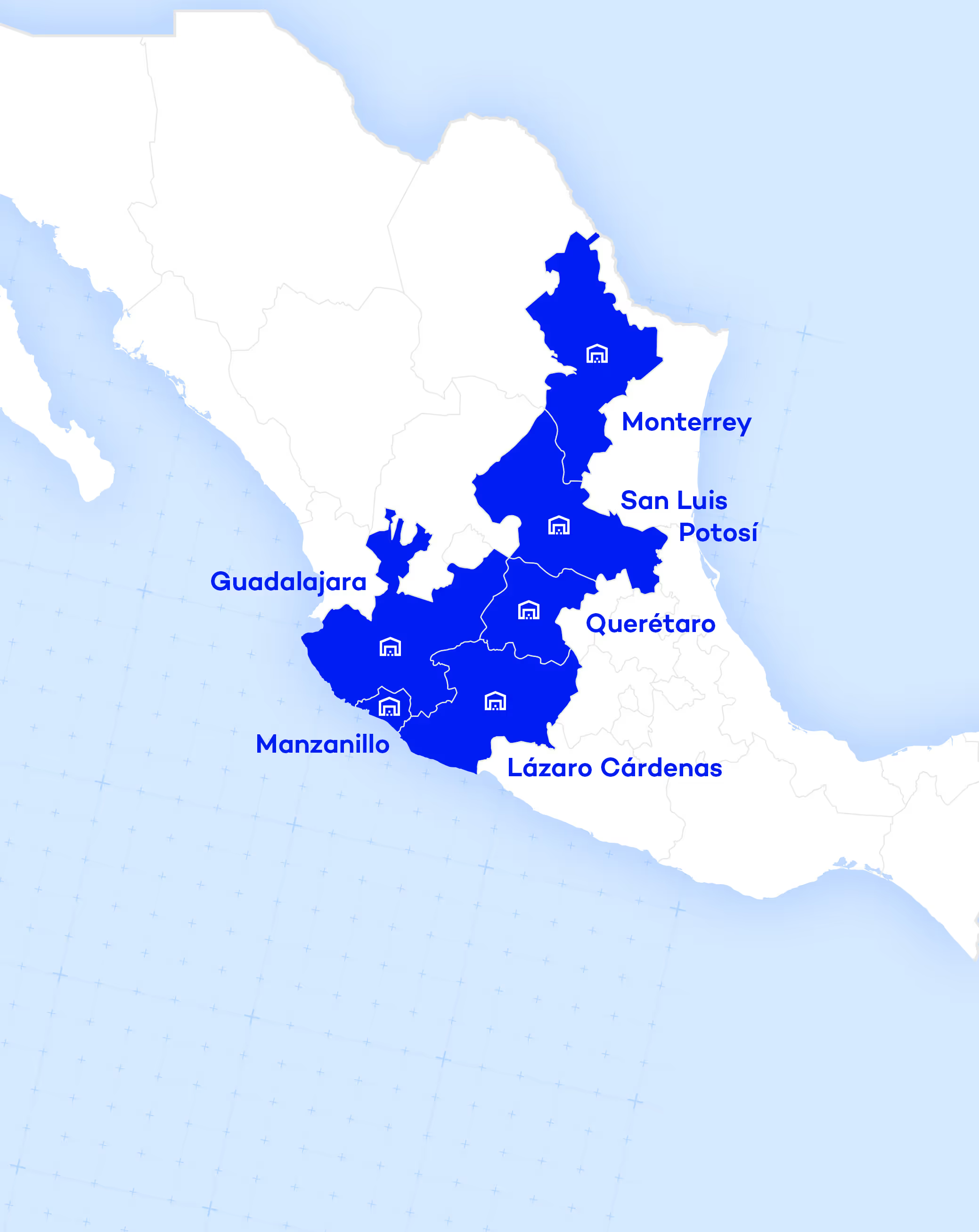
Nearshoring is projected to inject up to an additional $78 billion, with Mexico as the primary recipient. However, logistics support is concentrated in saturated corridors: Guanajuato leads with 312 qualified suppliers, followed by Mexico City (179), Querétaro (162), and Nuevo León (155).
Moving this volume with a traditional scheme is an operational liability. Logistics costs in Mexico already average 17% of sales due to border bottlenecks, structural inefficiencies, and a critical shortage of specialized equipment.
☕ Goodbye to Customs Bureaucracy: Self-Managed Procedures
To accelerate foreign trade, the Mexican government eliminated the need for notice rulings, converting them into immediate self-managed procedures through the Electronic Customs System (SEA). This reform significantly speeds up the just-in-time delivery of auto parts at border crossings, effectively eliminating bureaucratic delays.
🚨 RoRo, LoLo, and Project Cargo: High-Density Operations
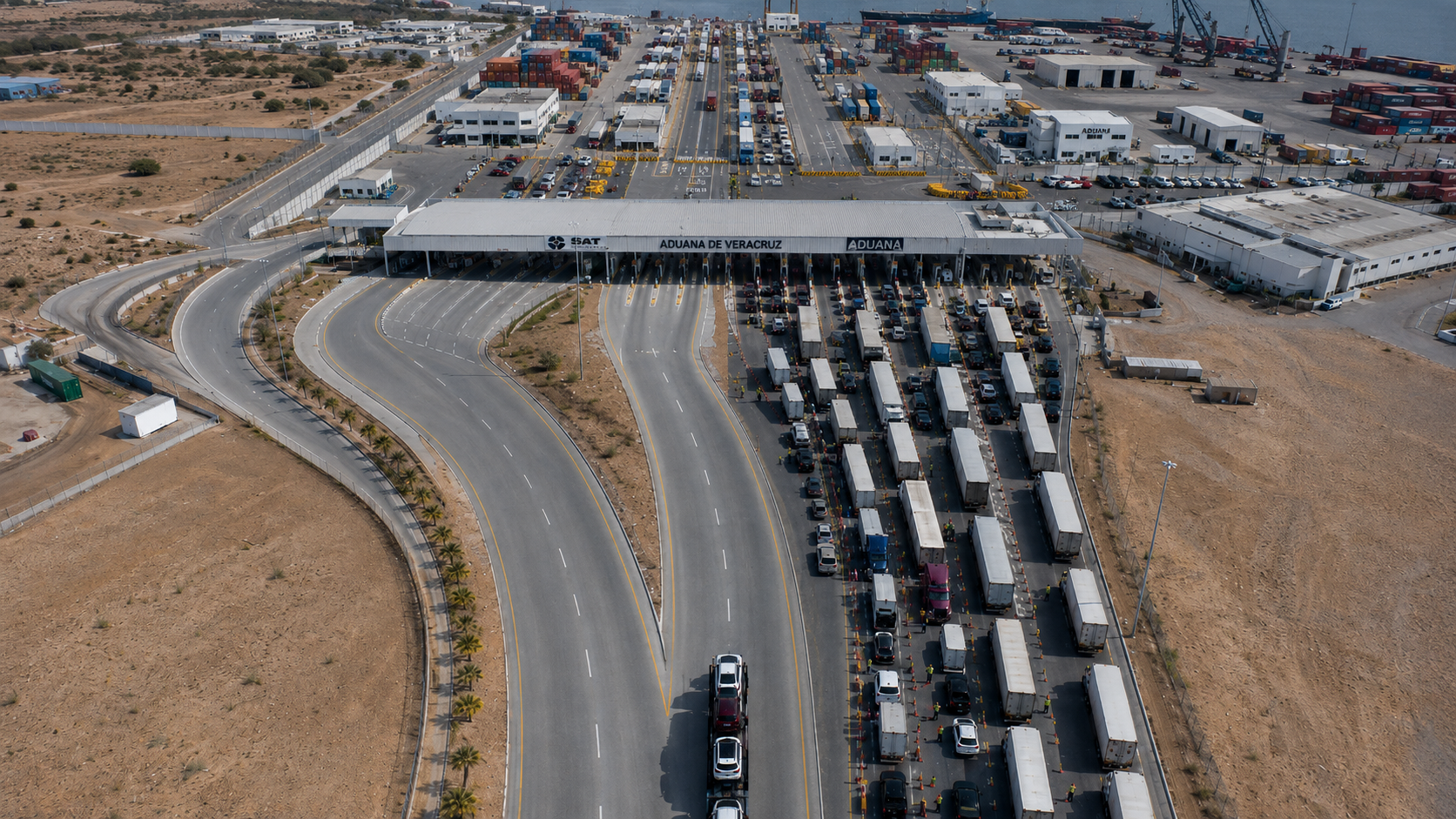
Maritime movement demands precision. By the first four months of 2026, Veracruz grew 17.0% annually (233,362 units), and Lázaro Cárdenas moved 202,636 units.
RoRo Mode: Avoids excessive handling by allowing units to drive on and off under their own power, drastically reducing the risk of damage at port.
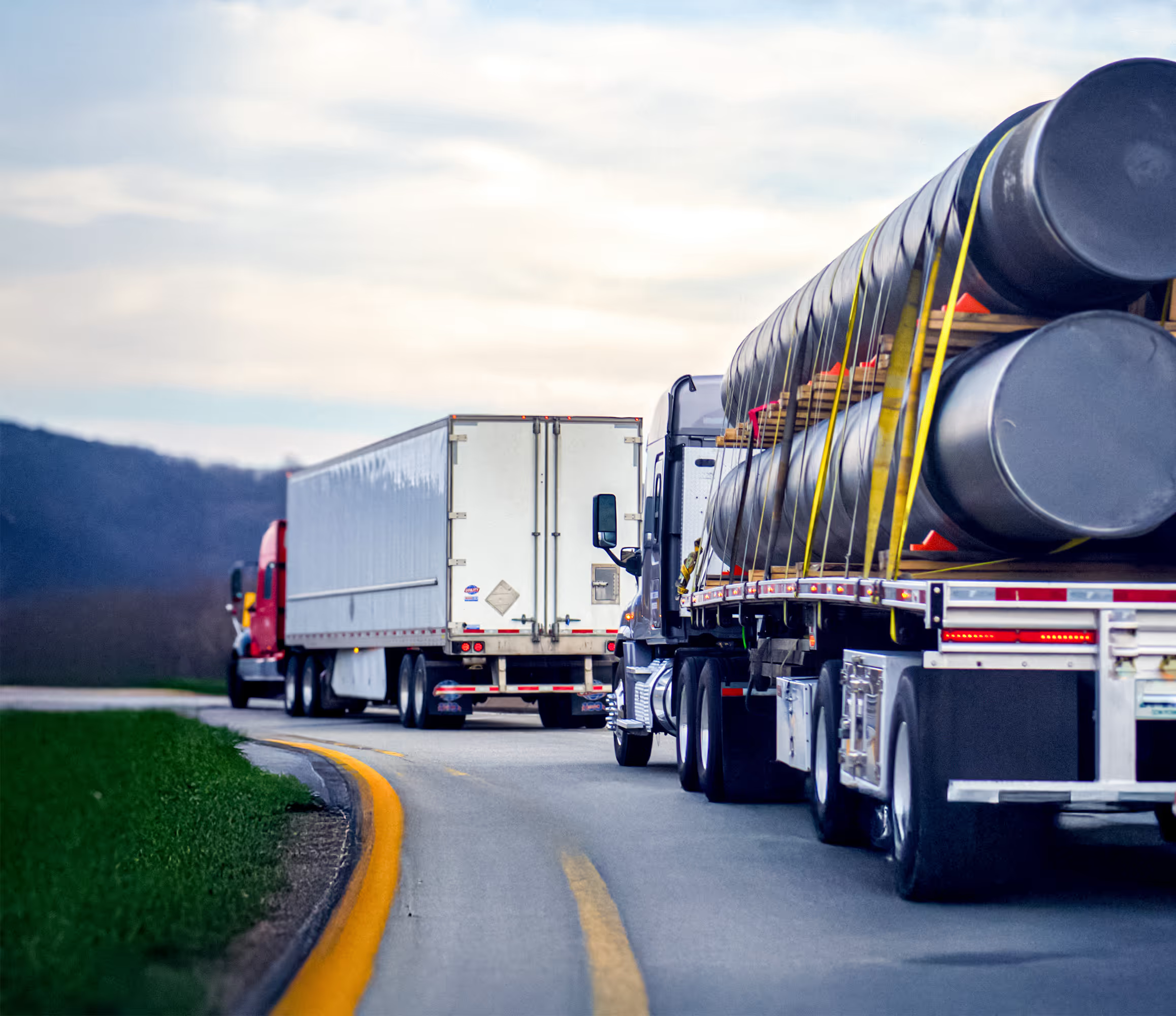
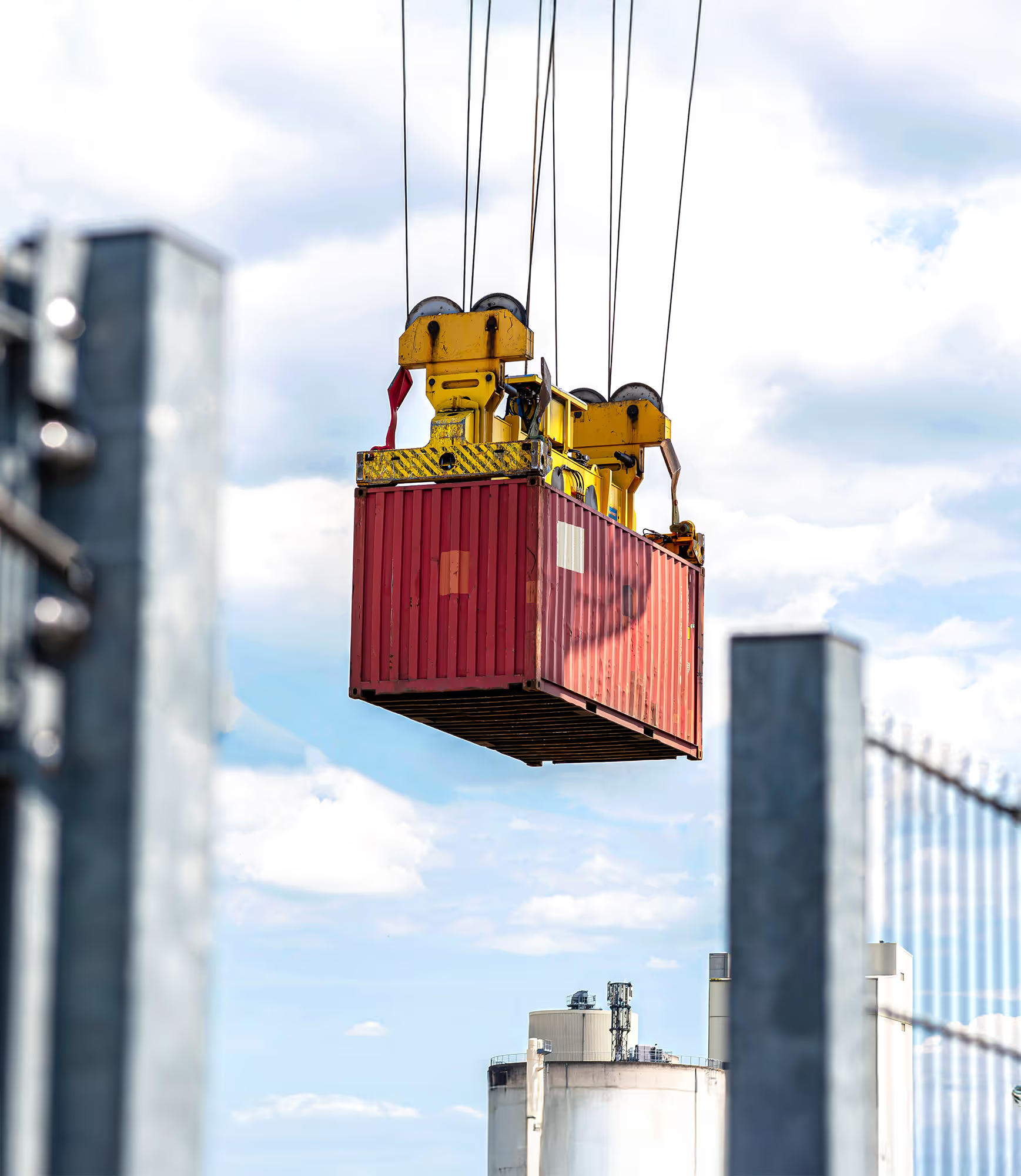
LoLo Mode and Project Cargo: Erecting new plants requires moving oversized industrial presses and tooling using heavy cranes. Ignoring a route study or failing to secure special permits guarantees the immediate retention of your investment at customs.
💡 4PL Logistics: The Brain Replacing the Traditional Freight Forwarder
In the face of a cross-border value chain, the conventional freight forwarder is no longer sufficient. Operating with manual processes imposes an operational burden; therefore, leaders are migrating to 4PL logistics.
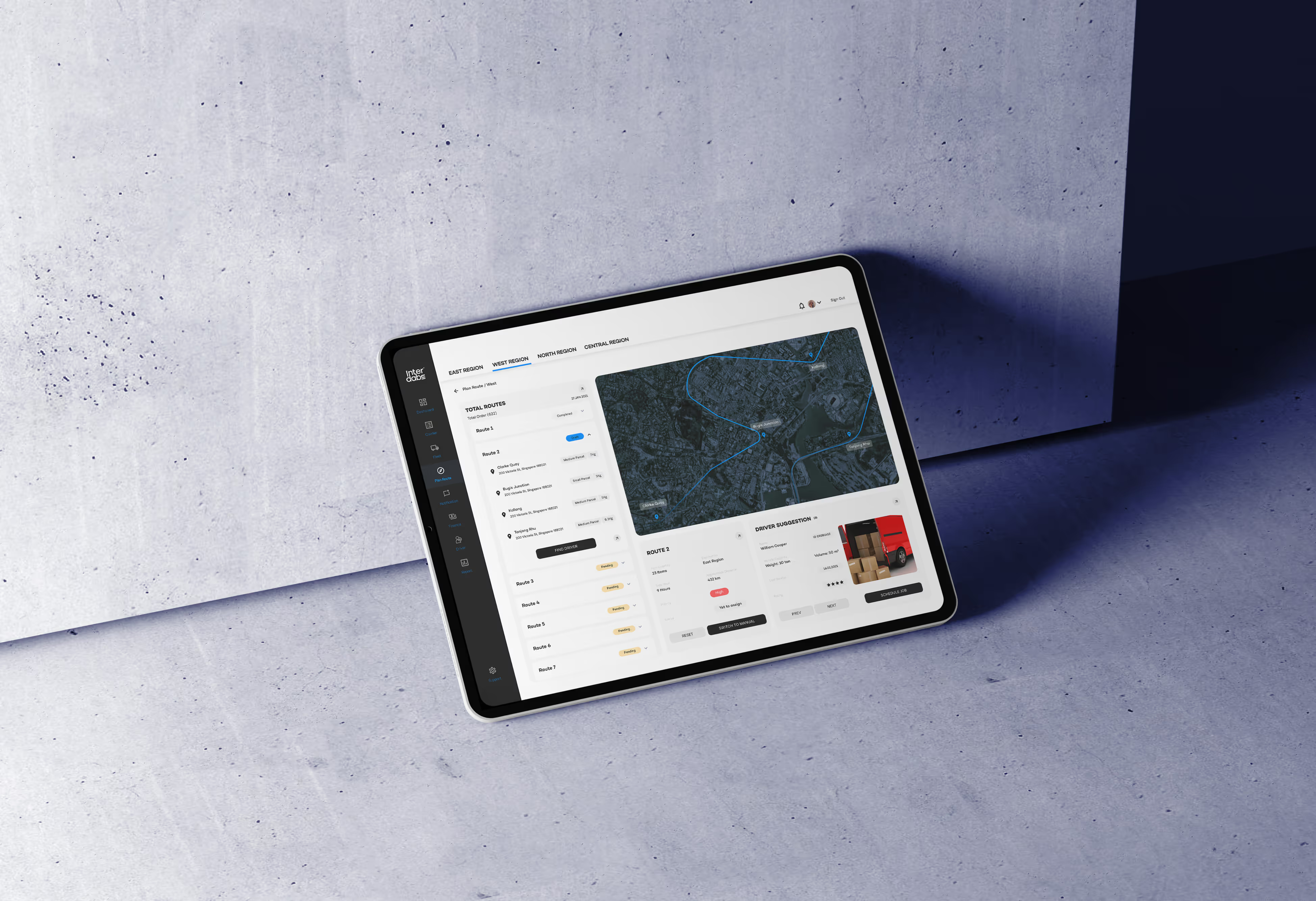
A centralized control tower with artificial intelligence unifies customs, ground fleets, and yard management. The efficiency of this model is undeniable: award-winning firms in the automotive ecosystem demonstrate that predictive visibility is the only tool capable of preventing line stoppages and costly penalties.
☕ Survival Strategy for Directors
To ensure your continued presence in the North American market in 2026, your immediate action plan must include:
Digital origin audit: Certify the origin of every ton of steel before the 2027 rule freezes your goods at customs.
Data governance: Link Complemento Carta Porte 3.1 with your inventories to prevent a digital error from leading to the abandonment of goods by the SAT.
Multimodal architecture: Combine border road transport with RoRo maritime schemes and rail services to eliminate the congestion tax on highways.
Is your operation ready for the new tariff landscape, or will you leave your clients' deductibility to chance? Don't wait for an audit to react. Speak with transportation engineering experts today and safeguard your supply chain.
{{4PL}}





Everything your logistics needs

.jpg)

.png)